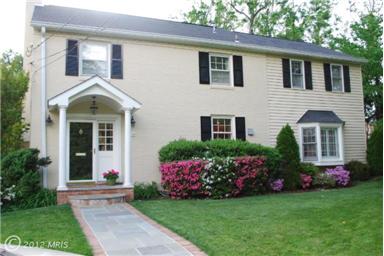
 811 Albany Ave, Alexandria VA 22302
Check out this listing here: http://www.kfoleyhomes.com.z57preview.com/listings/D9052FC5-0E39-8473-9B7288F1817DC798.shtml

811 Albany Ave, Alexandria VA 22302
Check out this listing here: http://www.kfoleyhomes.com.z57preview.com/listings/D9052FC5-0E39-8473-9B7288F1817DC798.shtml

Quoted from:
Focus on First Time Homebuyers by Tim McLaughlin
There has been a dramatic shift occurring in the housing sector. According to Realty Times, of the 8.4 million people who have purchased a home in the last two years, 41 percent of them have been first time buyers. This number is up from 35 percent in 2007, and experts believe this growing demographic will influence the home-style landscape in the years to come for first time purchasers.
Today’s first time homebuyers have as much desire to establish household independence as their parents did, but the economic environment has impacted their preferences to some degree. This demographic is much more aware of both how much home they need and what they can afford. But they also have specific preferences in layout, efficiency and neighborhood type according to recent statistics.
On average, over the past few years, first time buyers are buying smaller, lower priced houses than trade up buyers are, the majority buying homes with avg. square feet under 2,500. This buying preference is partially affected by the economy and by maintenance costs, according to Realty Times.
In addition, first time homebuyers seem to have a different mindset regarding a home purchase. They look at the transaction as securing a place to live in first and foremost. While they have less to spend, they want the space they can afford put to the most effective use. This means that the practical spaces they will use every day, like kitchens, laundry rooms and the master bedroom, are their key focus. They appreciate open spaces that can be defined by furniture rather than walls and hallways. Additionally, home location appears to be important to these buyers, who have a keen interest in transit oriented communities. This makes urban areas highly appealing, as well as suburban areas with walk able town centers.
Of biggest concern to this subset appears to be financing questions: qualifications, the right loan structure with the least amount of money down, and understanding an approval process that is much more cumbersome than what their parents had to deal with.
This market is a tough one to navigate…we have very low inventory because of sellers still waiting for appreciation before they will list, but plenty of buyers out looking to take advantage of the great interest rates and loan programs to get into their first home or move up into their “forever home”. In this environment, it is so important to have a Realtor you trust to help you navigate the offer process as well as all of the steps between the contract signing and settlement. Between the appraisal, the home inspection, rent-backs and more…it is important to choose someone you like and trust and who keeps current on laws, best practices and the market pulse to guide you through the process (regardless of how many times you have bought and/or sold a home).
Well, I think you know what I am going to say…NO! What else were you expecting from a Realtor? 🙂
Here is the reason for my emphatic “no” though and why you should think twice before asking for a reduced commission.
1) If the agent is worth their “salt”, they will prove to you why they deserve their full brokerage fee (which by the way is decided by each broker). If they don’t prove it to you, interview someone else. Don’t ask the person who didn’t wow you if they will take 5% instead of 6% if they are asking for 6%…if they don’t make you believe they can do it, you probably aren’t going to be happy with them after they have had your house on the market for 100 days regardless of the fact that you are paying a reduced rate.
2) If the agent shows what they will do to sell your home and proves their worth, why would you even ask? Do you ask your doctor to reduce their fee? If you did, they would say find another doctor…but wait, if you have already seen the doctor, you have to pay either way or you get invoices and then nasty grams from their office. What other profession does all the work, pays out-of-pocket to market a product and if it doesn’t sell, doesn’t get paid a dime?
3) Here is where the commission goes… let’s use the example of a brokers fee being 6%. That 6% gets split between the listing brokerage and the selling brokerage (buyer’s brokerage) 50/50 (usually) that is 3% for each side (even though the listing agent and brokerage pay for all of the marketing). Then, each brokerage takes a portion of that fee (sometimes as much as 50%) and gives the remainder to the agent. At the end of the day, the agent has made a fraction of the full fee and has done all of the work.
4) If you get the agent to take a reduced fee (let’s say 5% instead of 6%) that agent either has to take 2% for their brokerage and offer 3% to a buyer’s broker or split the discount 50/50 (2.5% each). Let me tell you a little secret…a lot of agents will avoid showing homes where the seller is offering less than what they are used to seeing or what they feel should be offered. In this case 3% vs. 2.5%. I am not one of those agents because I am ethical, but not everyone is the same as me. This is potentially giving your home less showings. If your agent is kind enough to still offer out 3% and only take 2% for themselves, they are spending all of the money and making a much smaller share…is that really fair to ask of the person whom you have trusted to sell your home?
5) Many brokerages will not allow a reduced fee. In other words, if a brokerage has decided that their brokerage fee for a listing is 6%, then they will not allow their agents to accept less than that without approval. If an agent decides to reduce the fee, a lot of brokerages will make the agent carry the full discount and therefore reducing that agent’s split to cover the loss. Now the agent has made even less money.
6) Yes, the more homes you sell, the less you can charge (so if you are interviewing a “top” agent who takes a low fee, it is only reasonable that they sell a lot of homes, so they must do a good job); however, what happens in business when volume becomes more important? That is right, quality often suffers. The agent, in an effort to move their inventory fast enough to make up for their low commission can tend to allow for getting less for your home just to get it sold. Think of the Wal-Mart model vs. the Nordstrom model of business….low price vs. good service…
7) Paying someone a flat fee to put your home on the MLS and doing all of the negotiating yourself. Well, it will get some showings and will probably sell eventually, but you are not getting representation. You should probably still hire an attorney (which will cost more money) and it will likely take longer to sell the house because nothing else is being done to market it AND because you have probably priced the home too high as well because you have gotten no advice from a professional educating you on what the market will bear. This will actually have the opposite effect of money savings because it will force you to make payments on the home for longer than necessary until it sells all while you are potentially missing out on homes you would like to purchase because your home hasn’t sold. Also, by the time the home does sell, you will probably end up selling if for less than an agent would have because you have had it on the market for so long that you are ready to be rid of it. Had you paid a real full service agent, you may have sold it sooner for a higher price and paid less in the long run because you are not carrying those payments for an extra number of months.
I understand that it is a lot of money coming out of your pocket, but when you are hiring someone to do a job, any job, you want them to do the best they can, and that has value. If selling your home is of value to you, why would you be unwilling to pay someone their full fee for their efforts?
 Kfoley Homes by Kristen Foley, REALTOR®