Real Estate, The Market

Should you ask a Realtor to reduce their commission?

Well, I think you know what I am going to say…NO!  What else were you expecting from a Realtor? 🙂

Here is the reason for my emphatic “no” though and why you should think twice before asking for a reduced commission.

1) If the agent is worth their “salt”, they will prove to you why they deserve their full brokerage fee (which by the way is decided by each broker).  If they don’t prove it to you, interview someone else.  Don’t ask the person who didn’t wow you if they will take 5% instead of 6% if they are asking for 6%…if they don’t make you believe they can do it, you probably aren’t going to be happy with them after they have had your house on the market for 100 days regardless of the fact that you are paying a reduced rate.

2) If the agent shows what they will do to sell your home and proves their worth, why would you even ask?  Do you ask your doctor to reduce their fee?  If you did, they would say find another doctor…but wait, if you have already seen the doctor, you have to pay either way or you get invoices and then nasty grams from their office.  What other profession does all the work, pays out-of-pocket to market a product and if it doesn’t sell, doesn’t get paid a dime?

3) Here is where the commission goes… let’s use the example of a brokers fee being 6%.  That 6% gets split between the listing brokerage and the selling brokerage (buyer’s brokerage) 50/50 (usually) that is 3% for each side (even though the listing agent and brokerage pay for all of the marketing).  Then, each brokerage takes a portion of that fee (sometimes as much as 50%) and gives the remainder to the agent.  At the end of the day, the agent has made a fraction of the full fee and has done all of the work.

4) If you get the agent to take a reduced fee (let’s say 5% instead of 6%) that agent either has to take 2% for their brokerage and offer 3% to a buyer’s broker or split the discount 50/50 (2.5% each).  Let me tell you a little secret…a lot of agents will avoid showing homes where the seller is offering less than what they are used to seeing or what they feel should be offered.  In this case 3% vs. 2.5%.  I am not one of those agents because I am ethical, but not everyone is the same as me.  This is potentially giving your home less showings.  If your agent is kind enough to still offer out 3% and only take 2% for themselves, they are spending all of the money and making a much smaller share…is that really fair to ask of the person whom you have trusted to sell your home?

5) Many brokerages will not allow a reduced fee.  In other words, if a brokerage has decided that their brokerage fee for a listing is 6%, then they will not allow their agents to accept less than that without approval.  If an agent decides to reduce the fee, a lot of brokerages will make the agent carry the full discount and therefore reducing that agent’s split to cover the loss.  Now the agent has made even less money.

6)  Yes, the more homes you sell, the less you can charge (so if you are interviewing a “top” agent who takes a low fee, it is only reasonable that they sell a lot of homes, so they must do a good job); however, what happens in business when volume becomes more important?  That is right, quality often suffers.  The agent, in an effort to move their inventory fast enough to make up for their low commission can tend to allow for getting less for your home just to get it sold.  Think of the Wal-Mart model vs. the Nordstrom model of business….low price vs. good service…

7) Paying someone a flat fee to put your home on the MLS and doing all of the negotiating yourself.  Well, it will get some showings and will probably sell eventually, but you are not getting representation.  You should probably still hire an attorney (which will cost more money) and it will likely take longer to sell the house because nothing else is being done to market it AND because you have probably priced the home too high as well because you have gotten no advice from a professional educating you on what the market will bear.  This will actually have the opposite effect of money savings because it will force you to make payments on the home for longer than necessary until it sells all while you are potentially missing out on homes you would like to purchase because your home hasn’t sold.   Also, by the time the home does sell, you will probably end up selling if for less than an agent would have because you have had it on the market for so long that you are ready to be rid of it.  Had you paid a real full service agent, you may have sold it sooner for a higher price and paid less in the long run because you are not carrying those payments for an extra number of months.

I understand that it is a lot of money coming out of your pocket, but when you are hiring someone to do a job, any job, you want them to do the best they can, and that has value.  If selling your home is of value to you, why would you be unwilling to pay someone their full fee for their efforts?

Real Estate, The Market

What is “Buying a Listing”?

This was a great article written in the following blog: http://www.realestateabc.com/homeselling/toohigh.htm#But%20which%20Realtor%20do%20you%20choose?

Here are a few excerpts…The full article (link above) is worth a read:

…Amazingly, a couple of the Realtors have come up with prices that are lower than you expected. Although they back up their recommendations with recent sales data of similar homes, you remain convinced your house is worth more.

When you interview the third agent’s figures, they are much more in line with your own anticipated value, or maybe even higher. Suddenly, you are a happy and excited home seller, already counting the money….

The moral of the story is that pricing the home right at the beginning will get your home sold faster and this means you will be paying less in the long run.  Less monthly payments on that home…Less condo/HOA fees for the additional months it is on the market…Less time waiting on the home you want to purchase because your home hasn’t sold…and you may even take home MORE money because the longer time a home is on the market, the lower a buyer is willing to pay.  Had you priced it right up front you would have sold faster and for a higher price.

Financing-home loans, Real Estate, The Market

Optimism in the housing market

Fannie Mae headquarters
Image by futureatlas.com via Flickr

Optimism on the Horizon

by: Tim McLaughlin, Weichert Financial

Last week, Fannie Mae released their National Housing Survey for 4Q10. This comprehensive report and survey showed that the majority of Americans surveyed were upbeat and optimistic about the housing sector as compared to where we were 12 to 24 months ago.

The survey showed that Americans are more confident about the stability of home prices than they were at the beginning of 2010, even though there are some lingering concerns about the acceleration of the economy. If fact, over three-quarters of the respondents (78 percent) believe housing prices will hold steady or increase over the next twelve months.

Other takeaways:

Younger Americans are generally more positive about owning a home than the general population. 59 percent of Generation Y (ages 18-34) believes buying a home has a lot of potential as an investment.

As stated above, 26% of the general population thinks housing prices will increase over the next 12 months, with an additional 52% thinking that housing prices will remain about the same.

On average, members of the survey anticipate home prices to increase 0.4% over the next 12 months, while the same subset expects rental prices to increase 2.8% over the same time period. The expectation that rental increases will far outpace home price increases was prevalent with surveyors over the next five years, in fact.

One in four Americans said they would probably buy a home in the next three years (both current homeowners and non-homeowners), and one in three Hispanics and African Americans were of this thought process.

One interesting (and probably obvious) fact: poor credit is the number one stumbling block keeping potential borrowers from owning a home.

Financing-home loans, Real Estate, The Market, Tips and Tricks

FHA appraisals

Workers using special "roofing shovels&qu...
Image via Wikipedia

FHA appraisals do not differ from conventional appraisals in a large way; however, there are a few differences.

One main difference is that there can be more required repairs.  A big one is the roof.  These are the appraisal guidelines for FHA appraisers:

Roofs and Attics:

The roof must prevent moisture from entering the home and provide reasonable future utility, durability and economy of maintenance. The roof should have a remaining physical life of two years. If the roof has less than two years remaining life, the appraiser must call for re-roofing or repair.FHA will accept a maximum of three layers of existing roofing. If more than two layers exist and repair is necessary, all of the old roofing must be removed as part of the re-roofing.Roofing on slopes of 2.5/12 pitch or less must be installed by a licensed roofer using built-up roofing that meets the Uniform Building Code.

According to http://www.fhainfo.com/fhaappraisals4.htm:

These are the 12 Most Common FHA Repairs

These conditions are not listed to scare you, but to help you understand and erase any worries you may have.The purpose of a repair is to correct deficiencies which may affect the health and safety of the occupants or the continued marketability of the property. If possible, we suggest that you make any repairs to your home prior to the appraisal. This will improve the marketability and help the sale or refinance of your home go smoothly.

1. If the home was built prior to 1978, chipping, peeling paint must be scraped and painted. This includes interior, exterior, garages, sheds, fences, etc.

2. Any useful components (appliances, floor covering, etc.) of the home, especially the roof, should have 2 years of useful life remaining. A roof should have no more than 3 layers of shingles.

3. Broken windows and doors should be replaced.

4. The cause of negative drainage must be cured (i.e., improve drainage away from house, gutters, french drains, etc.).

5. Health and safety hazards (i.e. electric garage door opener won’t reverse with resistance; burglar bars). GFIC outlets are not an FHA requirement.

6. Abandoned inoperable wells must be capped and sealed by a licensed well sealing contractor.

7. Safety handrails should be installed in open stairwells of three or more stairs.

8. Infestation of any kind should be exterminated (i.e., insects, mice, bats, etc.).

9. Damaged or inoperable plumbing, electric and heating systems should be repaired. The appraiser will check these areas.

10. Structural or foundation problems must be repaired.

11. Flammable storage tanks must be removed and filler cap sealed from the inside (i.e., buried oil tank).

12. If there is a crawl space, it will be the homeowner’s responsibility to make this area accessible so that it can be thoroughly inspected

All of the information in this post was taken word for word from: http://www.fhainfo.com/fhaappraisals4.htm

This is meant to be helpful in the determining the right home for you if obtaining an FHA loan or accepting the right offer if you are a seller considering an offer with an FHA loan. Always discuss this information with your Realtor and lender to get more specifics.

**Regardless of the type of loan being used to purchase your home, it is always a good idea to fix anything broken and do all of the maintenance items you were putting off.  This will not only make any appraisal process go more smoothly, but will make a better showing to potential buyers as well.

area info, home for rent, Real Estate

3 BR Home for Rent near Ft Belvoir-only $1400/month!

PLEASE NOTE THIS HOME HAS BEEN RENTED…

8506 Gila Ct, Alexandria, VA 22309

Application was not accepted so this home is available again.

Listed for $1400/month

This spacious home is a 3 BR/1.5 Bath townhouse-style condo in Pinewood Lawns is ONLY 2 MILES FROM FT. BELVOIR!

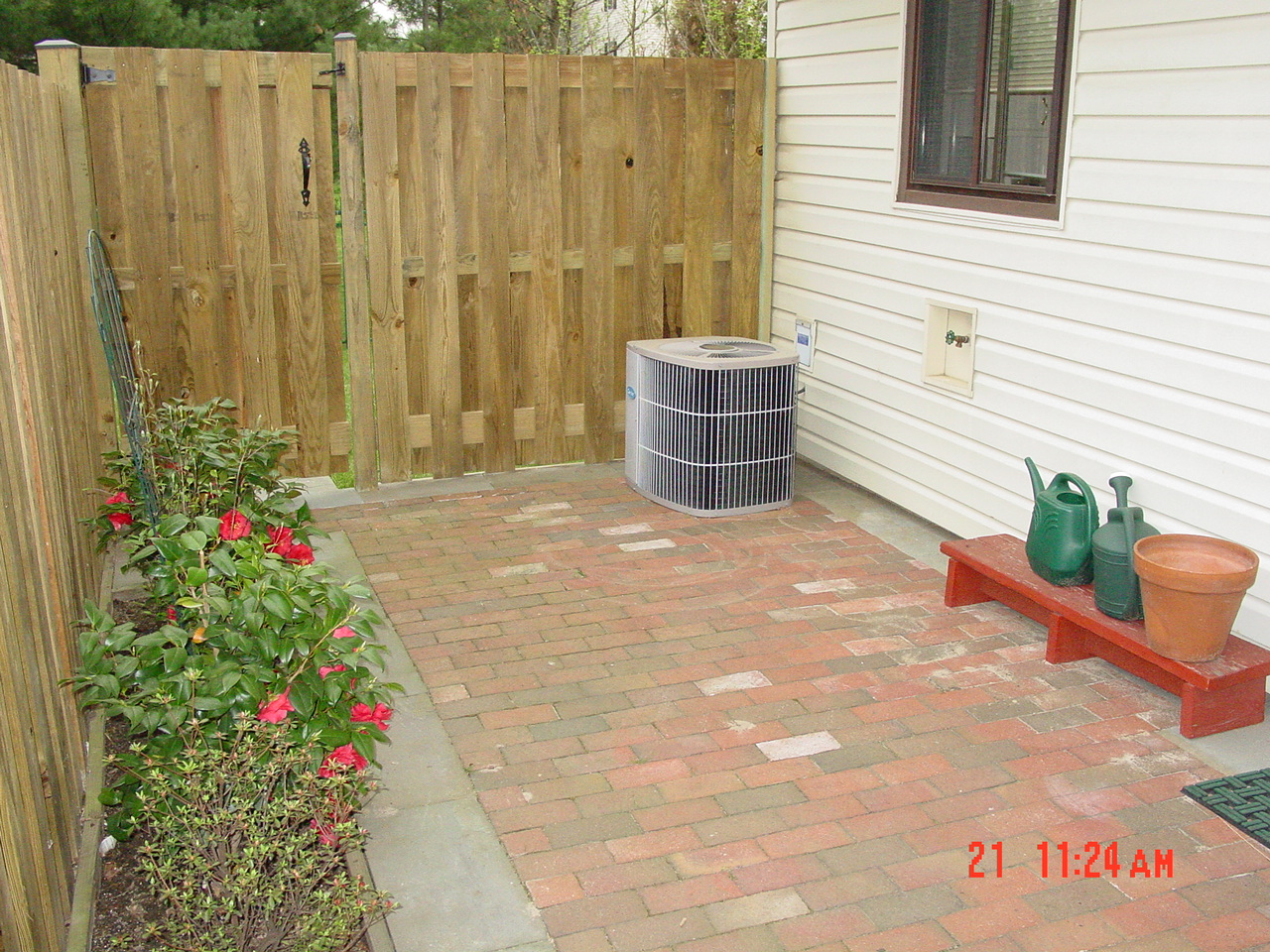
Unique features include, recessed lights w/dimmers in all rooms, tons of additional storage including floored attic space, a deep closet under the stairs and storage in car port, an expanded kitchen island provies additional cabinet space and counter space.  Crown molding and ceiling fans in all rooms. Washer/Dryer in unit housed in a large laundry room.  Private brick patio with high fence leading out to either parking area or common grounds. Owner willing to leave table, and china cabinet for tenant use during occupancy.

Rent includes: Condo Fees (allowing access to amenities and exterior/lawn maintenance), Water, Sewer and Trash Removal

Tenant Responsible for: Electric, Cable and Internet

Date Available: April 30, 2011

No Pets Please.

This rental is Non-Smoking.

Application fee is: $50 per married couple or per unmarried adult occupant (NON-REFUNDABLE)

Security Deposit and First months rent: $1400/each ($2800 total) are due at lease signing.

Please call or email for more information.

area info, open houses, Real Estate, Things to Do

Cameron Station Open House-Sunday, March 6 2011 from 1-4pm

503 Cameron Station Blvd, Alexandria VA 22304

Please join me for a Cameron Station Open House-Sunday, March 6 2011 from 1-4pm!

This lovely and spacious 2 BR, 2.5 Bath townhouse-style condo in the coveted community of Cameron Station (in Alexandria VA) is a must see!  Home features include: WOOD FLOORS, STAINLESS STEEL APPLIANCES AND GAS FIREPLACE ON MAIN LEVEL. Wood Blinds, upgraded light fixtures and neutral paint.  MASTER BR HAS FULL BATH TUB W/SEP SHOWER, CUSTOM WALK-IN CLOSET & EXTENDED PATIO. 1 CAR GAR + ASSIGNED SPOT. Email or call for more information!

Financing-home loans, Real Estate

FHA Mortgage Insurance Premiums to Increase

Logo of the Federal Housing Administration.
Image via Wikipedia

HUD has released Mortgagee Letter 2011-10 announcing an increase in the current Annual Mortgage Insurance Premiums (MIP or known to many as PMI) by 25 Basis Points (BPS)–which is a percentage measure equal to 0.01%– for all FHA Loans (a federally insured loan allowing people to put as low as 3.5% down to purchase a home).  Upfront MIP will not be changed.

Upfront MIP:

The upfront premium will remain at 100 BPS and will be charged for all amortization terms.  

Annual Premiums:

For FHA purchases and refinances, the annual premium has been increased.  The Annual MIP shown in basis points below is to be remitted on a monthly basis and will be charged based on the initial loan-to-value ratio and length of the mortgage according to the following schedule:

LTV >15 Year Loan-Annual MIP LTV <=15 Year Loan – Annual MIP
<= 95% 110 BPS (currently 85 BPS)   <= 90% 25 BPS (currently zero)
> 95% 115 BPS (currently 90 BPS)   > 90% 50 BPS (currently 25 BPS

Effective Date: This increase in Annual Mortgage Insurance Premiums will be effective for all FHA case numbers assigned on or after April 18, 2011. 

I am not a lender, so please check with your lender for particulars on any loan programs.

Financing-home loans, Real Estate

Real Estate and the Economy…

Real Estate = Big Money
Image by thinkpanama via Flickr

Did you know that for every home that is sold $60,000 is pumped into the economy… and, that the real estate industry represents 20 percent of the national economy — and has for the past 50 years?

Real Estate is not only a good investment for long-term wealth, but buying and selling homes affects our economy as a whole for the better.  Not only is money changed hands during the settlement process, but most people when they buy a home, do things like: go to home depot and buy paint, new appliances, general necessities…they go to furniture stores and purchase new furniture …they potentially do some renovation and hire contractors and purchase building materials.  This is all good for local businesses and the economy as a whole.

At the same time owning a home, while also providing a significant tax deduction, allows people to feel a sense of pride of ownership.  They can make changes to their home and personalize it.  They can plant roots in neighborhood and are more compelled to get involved in their local community.  Home ownership has many other non-financial implications that positively affect society.

The national media tries to paint the doom and gloom picture of the housing market and tries to scare people from buying and selling.  The fact of the matter is that even in areas where the inventory is high and there are a still a lot of foreclosures, investing in a home is still a good bet.

During the housing boom between 2004-2006/early 2007, people began to look at homes as a way to make a quick buck and now people expect to make $100,000 or more after owning their home for just a few years.  That was the problem and one of the reasons that the market had to adjust.  Owning a home is a long-term investment that gives you benefits along the way.  It shouldn’t be about “how much can I make on this home”, but how much you can enjoy living there and also take advantage of the tax benefits and the fact that you have a stable monthly payment (unlike renting where you can potentially see a 3% increase every year).  The goal is also that if you stay in the home long enough, you should also walk away with more than you put into it.  What other investment allows you to enjoy it while the money is invested and still get a return?  Don’t be fooled, when you rent, you are paying for someone else to have the advantage of selling for a profit some day…you have paid their mortgage and when you leave, you get nothing.

That being said, borrowing money isn’t going to get any easier.  Lending institutions want to make up for the past few years which means higher interest rates and more difficult qualifying criteria.  I never want to “scare” people into buying a home, but if you are on the fence, now is the time…there is a cost to waiting and for some that cost may be that they have to continue renting or that they can purchase much less house than before because their buying power has been significantly reduced.

Financing-home loans, Real Estate

Affordability…and “Housing Finance”

Silent Flight, Sleeping Dawn | 181.365
Image by Stephan Geyer via Flickr

Written By : Tim McLaughlin, Weichert Financial

First, on affordability, that was the housing tagline from Moody’s earlier this week. Moody’s came out with an analysis that spoke to the fact that home affordability returned to pre- bubble levels in a growing number of U.S. markets over the past year.

Data provided by Moody’s Analytics tracks the ratio of median home prices to annual household incomes in 74 markets. By that measure, housing affordability at the end of September 2010 had returned to or surpassed the average reached between 1989-2003 in 47 of those markets (64% – most economists believe the housing boom took off in 2003).

During the boom, lax lending and speculation pushed house price inflation far beyond the modest rise in household income. Nationally, the ratio of home prices to annual household income reached a peak of 2.3 in late 2005. But by last September 2010, it had fallen to 1.6, matching the lowest level in the 35 years the data have been collected and well below the historical average of 1.9 between 1989 and 2003.

“Based on income, this is as affordable as it gets,” said Mark Zandi, chief economist at Moody’s Analytics. “If you can get a loan, these are pretty good times to buy.”

=============

Regarding “Housing Reform”, the Treasury Department released its well anticipated “Reforming America’s Mortgage Finance Market” report to Congress earlier today. The report touches on the future of housing finance and outlines three options with various levels of Government support. However, the final plan will take years to develop, and the outcome will shape the future of the mortgage markets, including liquidity and home affordability.